top of page


Druids
Historical Event
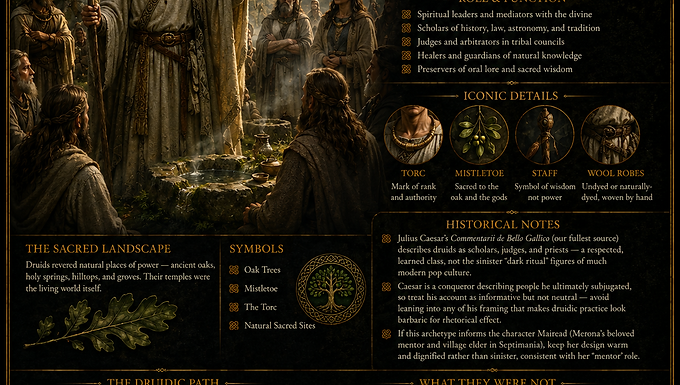
The Priestly & Scholarly Class of Celtic Gaul
Key Facts:
- Oversaw public and private sacrifice; adjudicated disputes and decreed penalties
- Trainees reportedly studied up to 20 years, memorizing verses orally rather than writing them down
- Taught that souls transmigrate between bodies after death — a belief Caesar claims made Gauls fearless in battle
- One druid held overall leadership, chosen by vote or, if necessary, by force
Overview:
- Per Julius Caesar's Commentarii de Bello Gallico (58–50 BC, our fullest ancient source), druids and the noble class (equites) were the two honored orders of Gaulish society. Druids served as priests, judges, and teachers.
Novel Relevance:
- The likely ancestor-tradition for any druidic or priestly magic-workers in the series — Mairead, described in the Canon Timeline doc as Merona's beloved mentor and village elder in Septimania, plausibly draws on this role. Worth deciding deliberately how closely Mairead's practice should track Caesar's account versus invented detail.
Sources:
- Primary Sources
- Caesar's Commentarii de Bello Gallico — written by the conqueror, likely shaped to make the Gauls seem civilized enough to be worth respecting and foreign enough to be worth conquering
- Modern Historians
- Ronald Hutton (Blood and Mistletoe: The History of the Druids), Barry Cunliffe, Miranda Aldhouse-Green — all stress how little independent, non-Roman evidence survives
druids
bottom of page